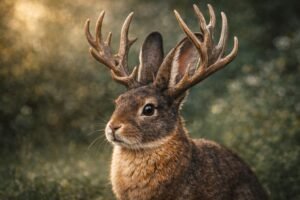
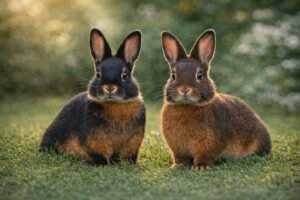
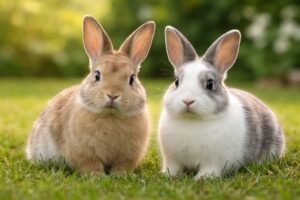
For a healthy adult Lionhead rabbit, start with constant access to grass hay, fresh water, suitable leafy greens and a measured portion of rabbit pellets. A feeding plan should reflect body condition and health, rather than a single cup measure for every rabbit. Young or unwell rabbits need individual veterinary advice.
Lionheads also need a suitable rabbit companion and space to move. Human attention does not replace those needs.
Introduction to Lionhead Rabbits
Lionheads are domestic rabbits recognised by the longer fur around their head. This guide focuses on practical feeding and coat care, rather than assuming that a breed name predicts personality.
Characteristics of Lionhead Rabbits
The mane needs regular attention because long fur can mat. Coat length varies between individuals; check the rabbit in front of you rather than relying on a fixed grooming schedule for every Lionhead.
Key Takeaways
-
Keep grass hay available without restriction. The diet should be based mainly on hay or grass, with suitable greens and a small measured pellet ration.
-
Treats are optional. Use part of the normal food allowance for rewards, and keep sugary extras small and occasional.
-
Provide fresh water continuously, appropriate living space and regular coat checks. These support daily care but do not guarantee freedom from illness.
Understanding the Natural Diet of Lionhead Rabbits
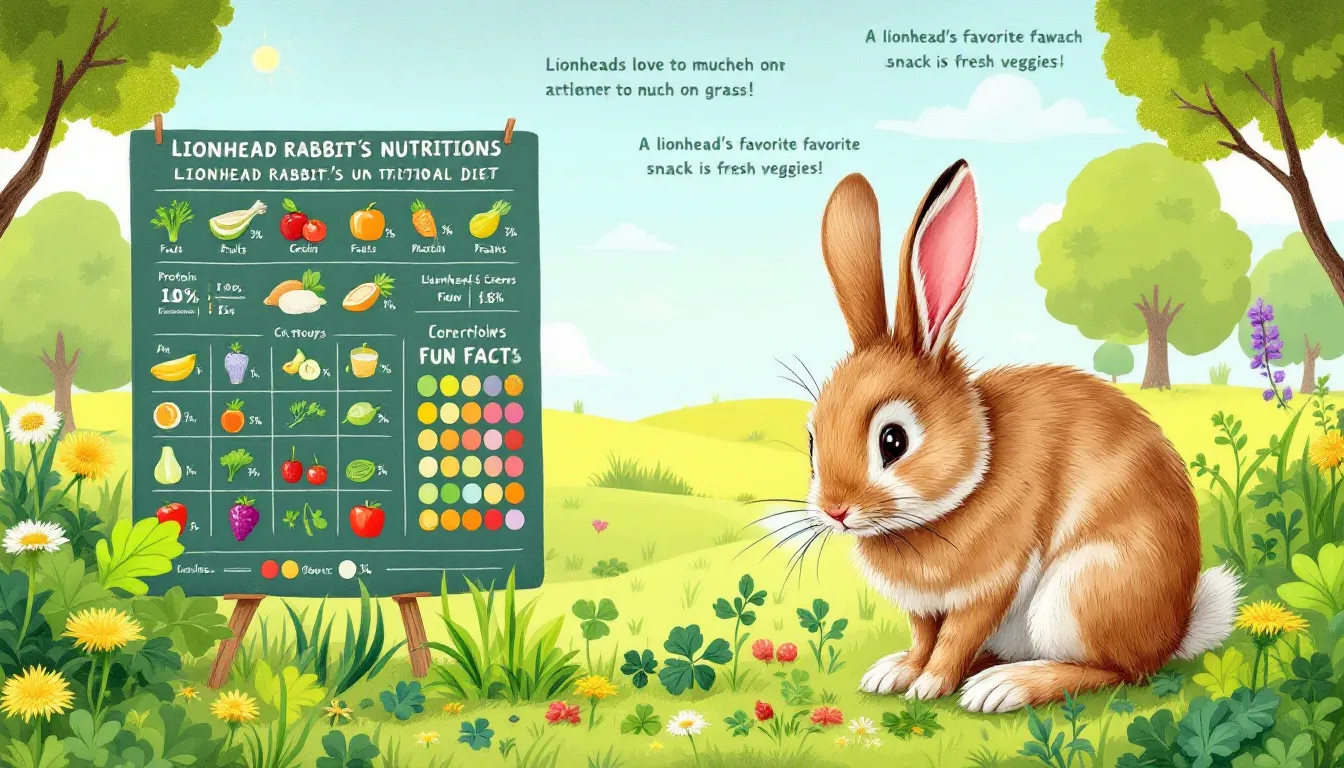
Domestic Lionheads are not wild rabbits. Grazing is a useful model for a fiber-rich diet, but it is not an invitation to feed unidentified plants.
For practical choices, see our guide to rabbit hay types. Choose clean feeding hay that your rabbit eats readily; do not judge suitability by a marketing label alone.
Essential Components of a Lionhead Rabbit’s Diet
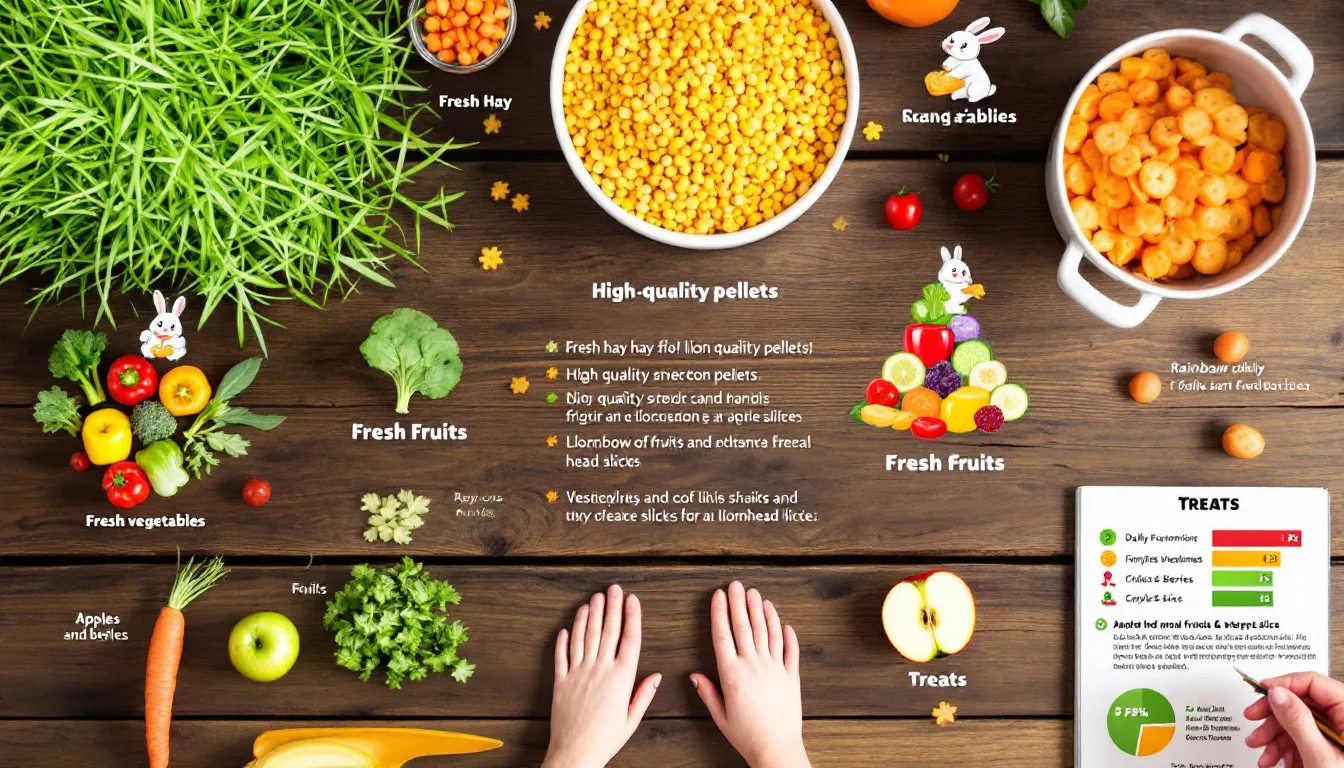
Hay or grass forms the foundation. Greens and pellets supplement it, while fresh water must remain available throughout the day.
A long coat does not make reduced eating a routine “hairball” problem. If appetite or droppings decrease, contact a rabbit-savvy vet promptly.
Hay: The Foundation of a Healthy Diet
Offer unlimited good-quality grass hay. The RSPCA uses a loose bundle as big as the rabbit as a daily visual guide, not the rabbit’s body weight and not a maximum ration. Replenish it whenever needed.
Choose dry, sweet-smelling hay without mold or excessive dust. Chewing hay supports normal tooth wear, but it cannot rule out dental disease. See how much hay to offer for the separate daily-amount question.
Fresh Vegetables and Leafy Greens
Offer a varied selection of suitable washed greens and herbs. Introduce unfamiliar foods gradually and monitor appetite and droppings. Romaine and appropriate herbs are options; vegetables do not replace hay.
Remove spoiled leftovers and keep feeding containers clean. Check fresh food regularly, especially in warm weather.
Pellets: Nutritional Support
Choose plain, high-fiber rabbit nuggets or pellets instead of a muesli-style mix. A universal 1/8-cup or egg-cup ration ignores differences in rabbit size and pellet density.
Ask your vet to help set a measured ration using your rabbit’s weight, body condition and the product’s feeding guidance. Excess pellets can displace hay. Do not cut food sharply to manage weight without advice.
Occasional Treats for Lionhead Rabbits

A small piece of suitable fruit can be an occasional extra for a healthy adult. Fruit is high in sugar and should not become a daily staple.
For routine rewards, use a little of the existing greens or pellet allowance instead of adding more calories.
Foods to Avoid Feeding Your Lionhead Rabbit
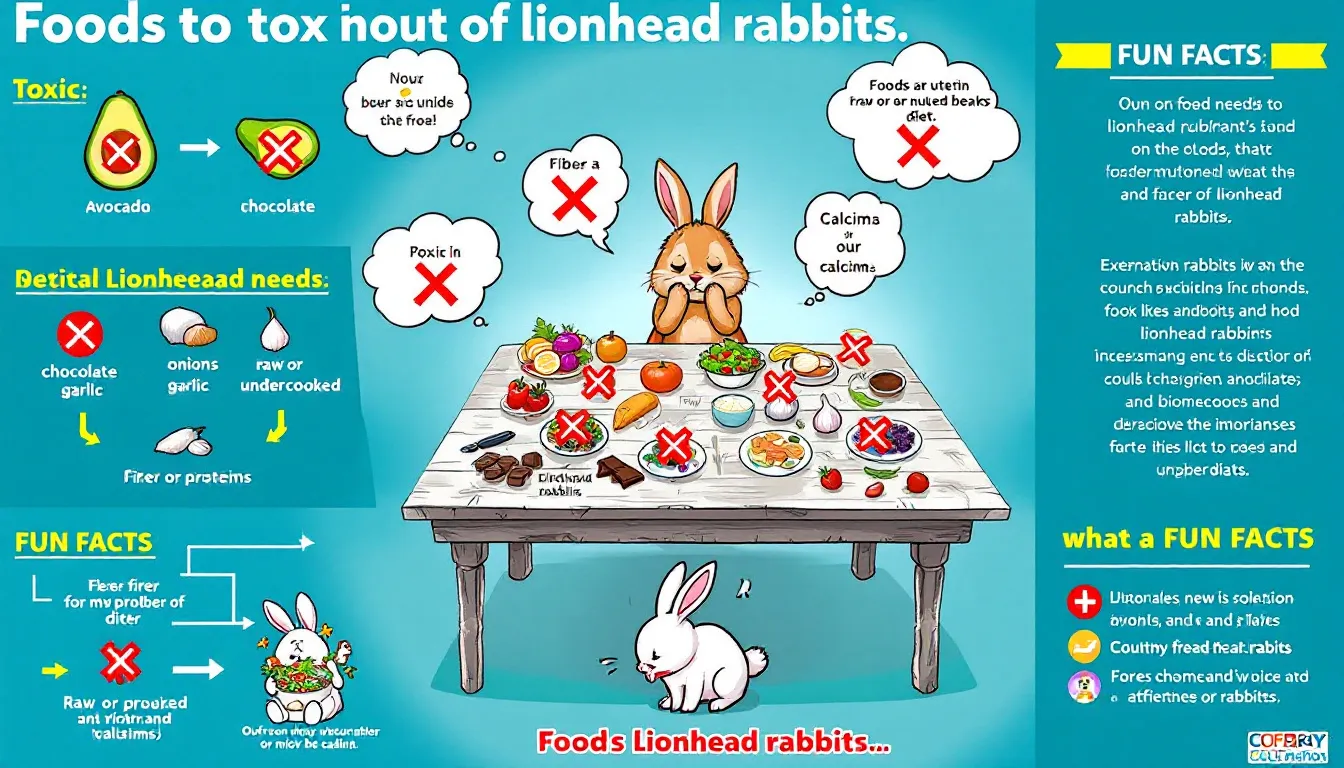
Avoid muesli mixes and human snacks such as bread, biscuits and sugary cereal. Do not offer unidentified plants or food exposed to pesticides.
Carrot root and fruit belong among occasional extras. Prefer leafy greens and herbs for the fresh-food part of the diet.
Parsley and carrot tops are examples of fresh greens, not special medicines. Introduce changes slowly and seek advice if eating or droppings change.
Importance of Fresh Water

Keep clean drinking water available at all times. Check the supply daily and more frequently during warm weather.
If you provide a bottle, check that it actually delivers water; keep a clean bowl available where practical. Reduced droppings or lethargy can have several causes and should not be diagnosed as dehydration from this article.
Common Health Issues
Monitor appetite, droppings, weight and coat condition. Dental and digestive problems can occur in any pet rabbit. Our health warning-sign guide explains when to seek help.
Dental Care
Hay chewing helps wear continually growing teeth. Toys are enrichment, not a substitute for hay or treatment. Drooling, food dropping, reduced appetite or weight loss warrant veterinary assessment. Never trim teeth at home; apparently normal front teeth do not prove that the back teeth are healthy.
Dietary Tips for Special Conditions
Young, pregnant, older, underweight or medically affected rabbits may need a different feeding plan. Ask a rabbit-savvy vet to tailor it; the adult guidance here is not a treatment diet.
Gut stasis can be an emergency. Contact your vet straight away if your rabbit eats less than usual or produces fewer droppings; do not wait for a diet change to work.
For the immediate action path, see what to do when a rabbit is not eating. Do not force-feed or start home treatments without veterinary direction.
Transitioning to a New Diet
Make routine food changes gradually. PDSA suggests introducing a replacement diet over about two to four weeks, adjusting to the individual rabbit.
That schedule applies to a rabbit that is eating normally. If appetite drops, get veterinary advice rather than continuing the transition and waiting.
Housing and Environmental Enrichment
A small cage is not adequate main accommodation. RWAF recommends a continuous area of at least 3 m × 2 m × 1 m for two average-sized rabbits, accessible at all times. A few hours of exercise does not compensate for confinement during the rest of the day.
Choose secure housing with comfortable, non-slip flooring and room to forage, hide and move. Our housing checklist explains what to assess before buying.
Companionship and enrichment belong in the care plan alongside food. Plan introductions carefully rather than simply placing unfamiliar rabbits together.
Regular Grooming and Its Impact on Diet
Check the mane daily for tangles and groom gently. PDSA highlights daily grooming of the long neck fur; the rest of the coat needs attention according to its condition.
Brushing removes loose fur and helps detect mats. It does not guarantee protection from gut problems. Seek experienced help for tight mats or sore skin; reduced eating needs veterinary assessment, not extra brushing alone.
Summary
The useful daily checks are simple: hay available, water working, a measured supplement ration, normal eating and droppings, and a comfortable coat. Review the plan with your vet when health or body condition changes.
Frequently Asked Questions
How much hay should I feed my lionhead rabbit daily?
Keep hay available continuously. A body-sized loose bundle is a visual starting guide, not a body-weight target or a cap on intake.
Can I feed my lionhead rabbit iceberg lettuce?
Choose suitable nutrient-rich leafy greens, such as romaine, rather than making iceberg lettuce the main fresh food. Introduce any new food gradually.
How often should I groom my lionhead rabbit?
Check the long mane daily and groom as needed to prevent tangles. Ask for help if mats are close to the skin.
What are the signs of dehydration in lionhead rabbits?
Changes in eating, droppings or energy can signal several illnesses. Do not use urine colour alone to diagnose dehydration. Contact a rabbit-savvy vet promptly for concerning changes.
How can I transition my lionhead rabbit to a new diet?
Introduce routine changes gradually while your rabbit is eating normally. If appetite or droppings decrease, stop treating it as a routine transition and obtain veterinary advice.