Why Rabbits Turn Their Back: The Short Answer
A rabbit that deliberately turns away while staying nearby may be expressing mild displeasure or asking for space—especially after handling, grooming, a carrier trip, or a change to their enclosure. However, the pose is not a stand-alone translation: read the ears, posture, appetite, droppings, activity, and what happened immediately beforehand.
This guide is for rabbit owners – especially new ones – who want to understand what it means when their bunny turns its back to them, how to interpret this behavior, and how to respond in a way that builds trust and a stronger bond. Understanding this common rabbit behavior is essential for improving your rabbit’s welfare and deepening the rabbit-human relationship.
Rabbits communicate primarily through body language, and “turning their back” is one of their most expressive signals. Turning their back can mean your rabbit is annoyed, wants space, feels safe and trusts you, is asking for grooming, or is showing submission. The meaning depends on the context and accompanying body language. Sometimes, a relaxed rabbit turning its back while near you is a sign of trust, or it may be a request for grooming or a submissive gesture. Context and body language cues help clarify the meaning.
Key Takeaways
- Rabbits often turn their back as a form of “bunny sulk” or mild protest, not because they hate their owner. This behavior is one of the most common forms of rabbit body language and signals temporary displeasure rather than permanent rejection.
- Turning their back can mean your rabbit is annoyed, wants space, feels safe and trusts you, is asking for grooming, or is showing submission. The meaning depends on the context and accompanying body language.
- This behavior is usually temporary and linked to a recent event such as grooming, nail trims, a rabbit visiting the vet, being picked up, or even a late dinner. Context matters tremendously when interpreting what your rabbit is trying to tell you.
- Turning away can also mean “I don’t feel safe yet” in new or poorly socialized rabbits. If you’ve recently adopted your bunny, this behavior is often part of the normal adjustment period.
- Giving space, staying calm, and offering gentle interaction or treats helps rebuild trust. Most rabbits forgive quickly when you respond appropriately to their communication.
- Persistent back-turning combined with other signs like a hunched posture, hiding, or refusing to eat can indicate stress or illness and warrants a vet check.
What Does It Mean When My Bunny Turns His Back to Me?
There is no single meaning. If your rabbit turns away immediately after a nail trim, carrier trip, medication, or unwanted handling, mild displeasure is a reasonable interpretation. If they remain nearby with a loose body, normal breathing, and normal eating, the posture is less likely to signal fear.
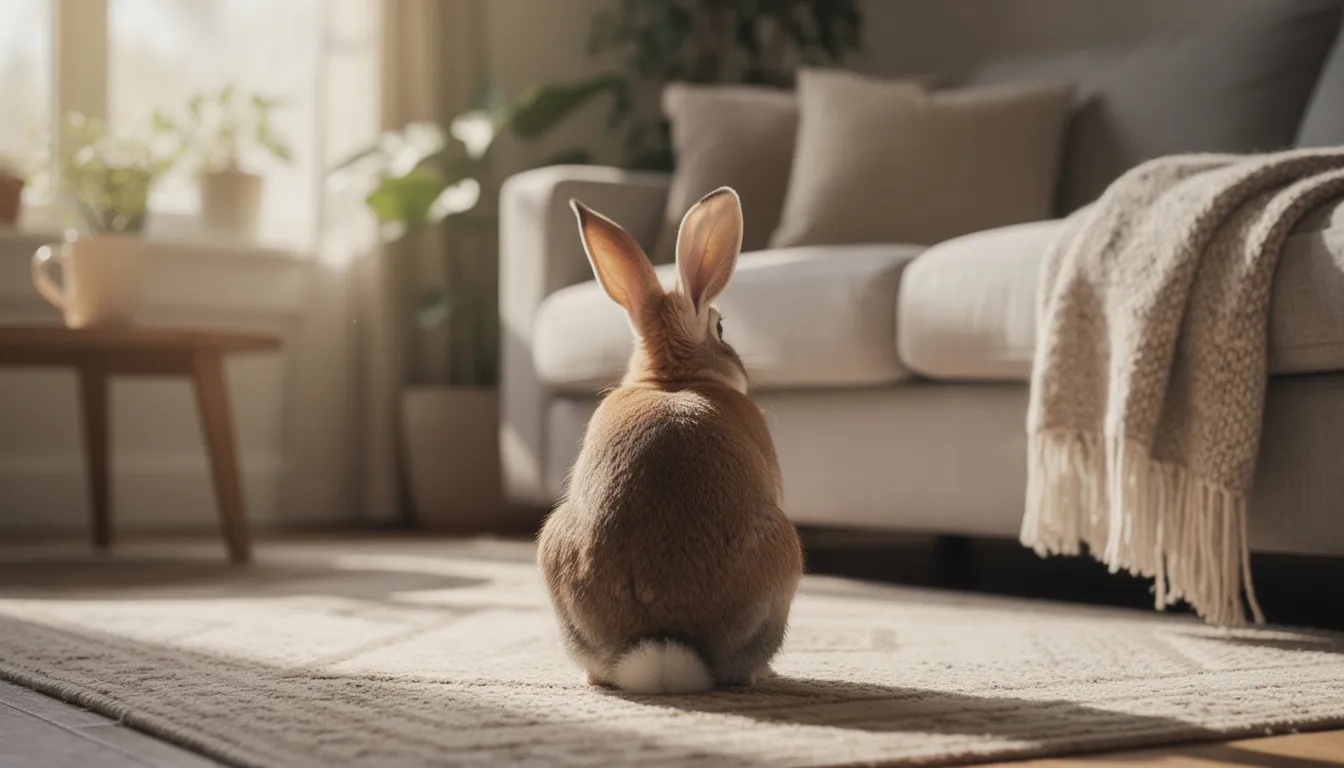
In rabbit body language, this deliberate positioning often signals mild annoyance, disappointment, or a classic “you offended me” message. Unlike prey animals, who flee when genuinely scared, a rabbit giving you the cold shoulder typically stays in the same room, often just a few feet away, but faces the opposite direction with pointed intention.
Turning their back can mean your rabbit is annoyed (such as after a nail trim or vet visit), wants space or is displaying territorial behavior, feels safe and trusts you (especially if relaxed and nearby), is asking for grooming (sometimes turning away is a request for interaction), or is showing submission (lowering the head while facing away is a submissive gesture). The meaning depends on the context and accompanying body language.
Sometimes, a relaxed rabbit turning its back while near you is a sign of trust, or it may be a request for grooming or a submissive gesture. Watch closely, and you might notice your rabbit glancing back over his shoulder or flicking an ear toward you. This shows he’s still paying attention despite facing away. He wants you to know he’s annoyed, but he’s also keeping tabs on what you’re doing next.
Common Triggers for Back-Turning
Understanding rabbit behaviour means recognizing the everyday scenarios that prompt this protest. Here are the most common triggers that lead to your bunny showing you his back:
- After nail trims or grooming sessions: Even when done gently, most rabbits find restraint stressful. Your bunny may hop away and turn his back immediately after you release him, spending time processing the indignity of having his feet handled.
- Following a vet visit: The combination of carrier travel, unfamiliar scents, handling by strangers, and possibly unpleasant procedures creates the perfect storm for post-visit sulking. Many rabbits show this behavior for hours after returning home.
- Being picked up when they didn’t want to be: Rabbits generally prefer having all four feet on the ground. Lifting them—even briefly—can trigger irritation, especially if they were in the middle of something interesting.
- When playtime ends too soon: Returning your bunny to his cage or pen when he wanted to keep exploring often results in a dramatic turn-away. This is essentially the rabbit equivalent of a toddler saying, “I don’t like you anymore” when bedtime is announced.
- Environmental changes: Rearranging their enclosure, moving a favorite cardboard box, or cleaning the litter tray “too well” removes their scent glands’ markings and disrupts their sense of territory. Many rabbits sulk after thorough cage cleanings.
- Delayed meal times: Rabbits love routine. If dinner arrives late, don’t be surprised when your hungry bunny lets you know exactly how he feels about your schedule management.
- Removing forbidden items: Taking away a chewed phone cable or an unsafe plant might be necessary, but your rabbit doesn’t understand safety concerns. He just knows you took his treasure.
In multi-rabbit households, jealousy dynamics come into play as well. A male bunny who received less grooming attention than his bonded partner might turn his back to you in protest, demanding equal treatment.
Is My Bunny Upset, Scared, or Just Being Dramatic?
There’s an important difference between “I’m mad at you” and “I’m scared of you,” and learning to distinguish between these emotional states helps you respond appropriately.
Annoyed vs. Scared: Key Differences
Signs of an annoyed but safe rabbit:
- Ears relaxed or slightly forward (not pinned flat against the head)
- Normal grooming while facing away—perhaps a casual ear wash
- Occasional nose twitching and environmental awareness
- Normal appetite when treats are offered
- Willingness to explore or move around the space
- A relaxed body posture despite the turned back
Signs of a truly scared rabbit:
- Tightly pressed body against the floor or in a crouched position
- Ears flat against the back of the head
- Tail tucked and legs tucked underneath
- Fast, shallow breathing
- Sudden dashes to hide when you move
- Freezing completely when you approach
An upset bunny typically chooses a spot still relatively close to you—perhaps across the room with his back turned. He feels safe enough to express annoyance openly. A truly frightened rabbit, on the other hand, will hide under furniture, inside a covered hideout, or press himself into corners trying to become invisible.
Here’s a quick reference for reading the situation:
| Behavior | Annoyed Bunny | Scared Bunny |
|---|---|---|
| Location | Visible, nearby | Hidden, inaccessible |
| Ears | Relaxed or slightly back | Flat against the head |
| Body | Loose, may groom | Tense, frozen |
| Movement | Occasional exploring | Dashing or freezing |
| Response to treats | Often accepts | Ignores or too afraid |
There is no reliable fixed time limit for a “sulk.” What matters is whether your rabbit returns to their normal pattern of eating, moving, resting, and producing droppings. A sudden or persistent change from normal deserves attention, especially when appetite or toileting also changes.
Additional Rabbit Body Language Signals
Rabbits rarely communicate with just one signal. They typically combine back-turning with other body language cues that refine the message they’re sending.
The classic “bunny butt” pose involves your rabbit sitting with its back to you, ears angled slightly back, and sometimes finishing with a quick flick of the hind feet when hopping away. This foot flick is the rabbit equivalent of a mild thump—a sign of disapproval without the loud warning that a full thump provides.
Watch for these accompanying signals:
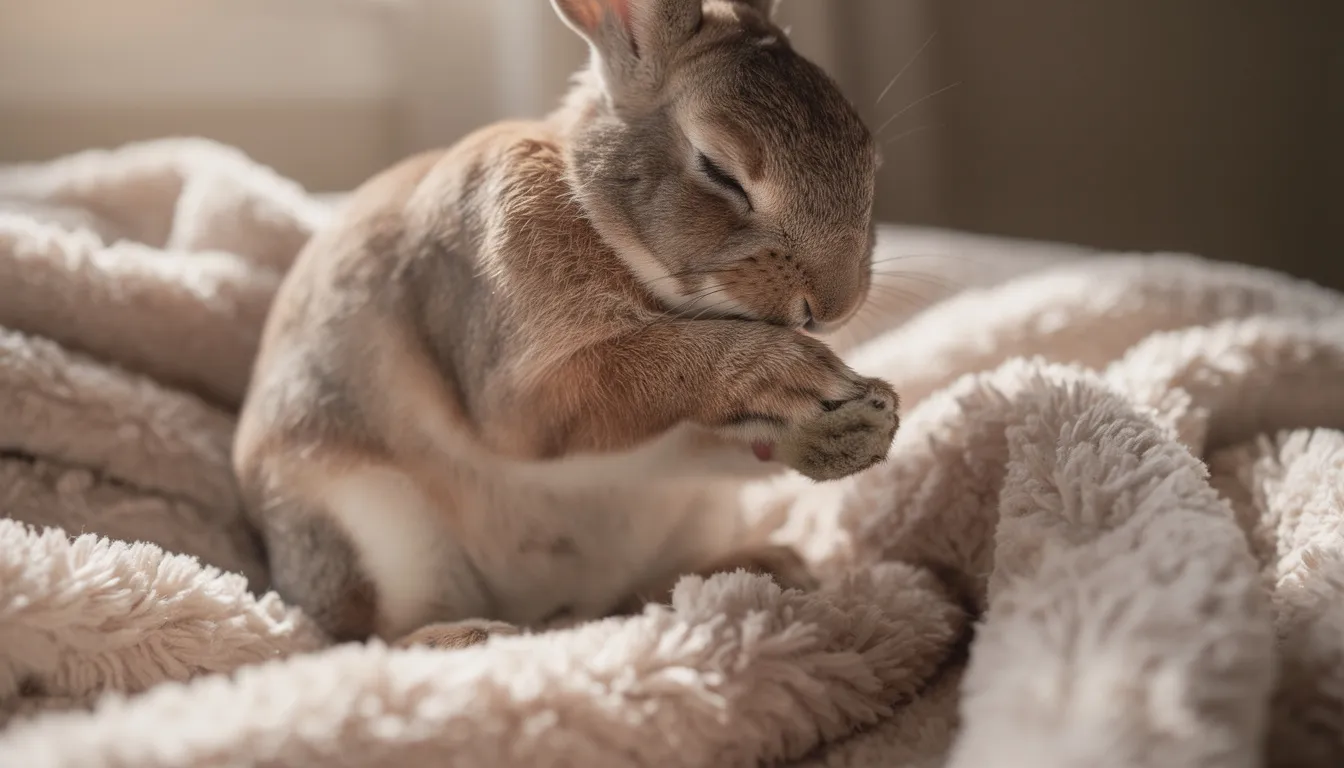
Soft, relaxed posture with casual grooming: This indicates a calm sulk. Your rabbit feels safe but wants you to know he’s annoyed. He might wash his front paws or ears while pointedly ignoring you. This combination suggests the drama will pass soon.
Quick glances over the shoulder: Your bunny is checking if you’ve noticed his protest and whether you’re doing anything to make amends. Consider this an invitation to offer a peace treaty (treats work well).
Tail wagging or raised tail: In rabbits, tail movement often indicates defiance or territorial feelings. Combined with back-turning, this suggests stronger irritation.
Grunting sounds: If your rabbit turns away while making grunting noises, he’s expressing genuine displeasure. This often occurs during cage cleaning or when his space is invaded.
However, some combinations should prompt concern rather than amusement:
- Tense, hunched posture with no grooming
- Squinting or half-closed eyes
- Teeth grinding (different from the soft tooth purring of contentment)
- Complete stillness for extended periods
These signals, paired with back-turning, may indicate pain or illness rather than simple annoyance. A rabbit in pain often avoids interaction and eye contact, sitting turned away to protect itself from touch.
How to Respond When Your Bunny Turns His Back
The most important thing to remember: do not chase, scold, or force interaction. These responses almost always make things worse and can damage the trust you’ve built with your rabbit.
Here’s a step-by-step approach for handling the bunny butt:
Step 1: Pause and give space. Stay calm, avoid chasing or forcing contact, and let your rabbit decide whether to move away or remain nearby. Check that they are eating, producing normal droppings, moving comfortably, and are not hunched, squinting, or breathing rapidly.
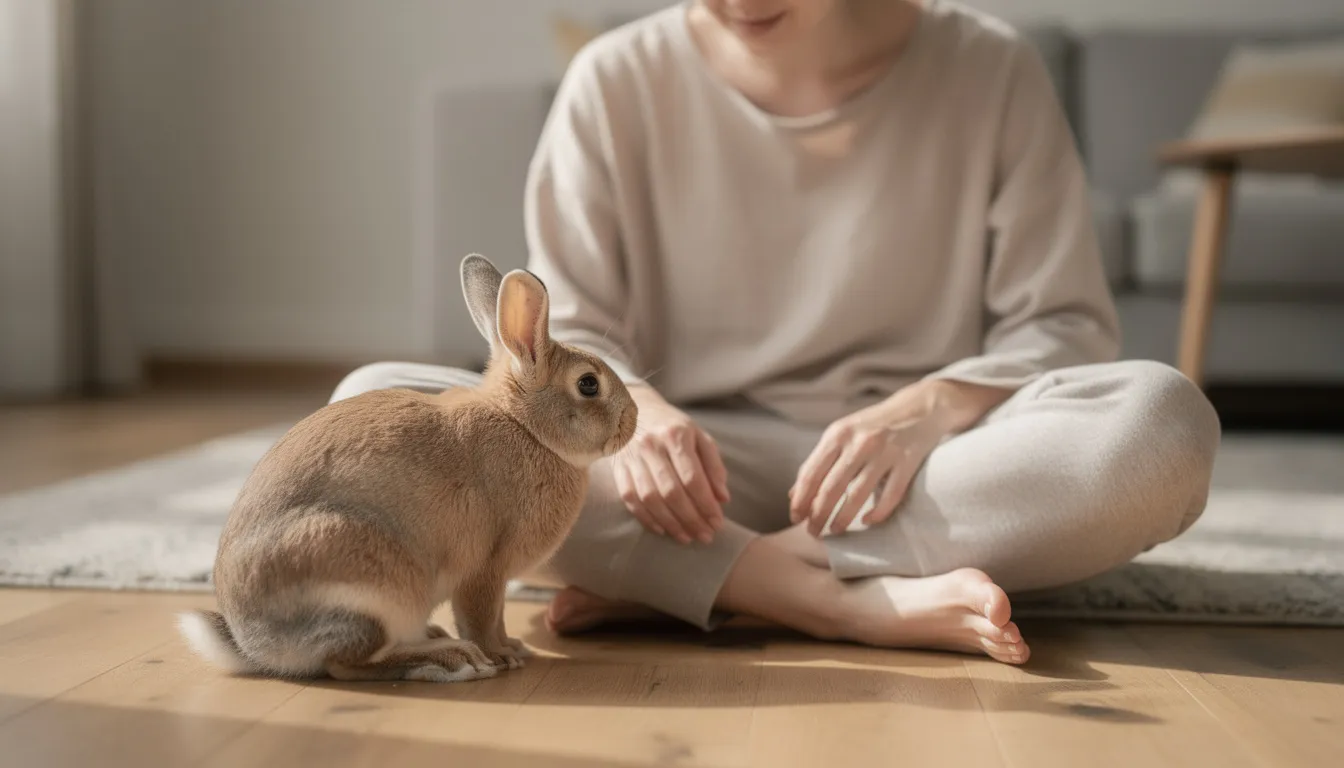
Step 2: Let your rabbit approach. Sit at floor level and speak softly. You may place a small portion of their usual leafy greens or pellets nearby, then step back. Do not use food to dismiss signs of pain or reduced appetite.
Step 3: Use your voice wisely. Speak softly using your rabbit’s name. Avoid loud noises or sudden movements. Rabbits are social animals who can learn to associate your voice with safety and positive experiences.
Step 4: Get on their level. If your rabbit begins to turn toward you again, lower yourself to floor level rather than looming from above. Sit quietly and let him come to investigate you. This respects his perspective as a prey animal who finds overhead approaches threatening.
Step 5: Be consistent. Responding gently every time your bunny sulks teaches him that you are safe and predictable, even when you have to do “unpleasant” tasks like grooming or administering medicine. Over time, this consistency builds deep trust.
Resist the urge to immediately offer treats or attention every single time your rabbit turns away. While you want to rebuild the connection, you also don’t want to inadvertently reward dramatic behavior to the point where your bunny learns that sulking always results in immediate treats.
Preventing Frequent “Bunny Butt” Moments
While some sulking is completely normal and even healthy rabbit behaviour, you can reduce how often your pet feels the need to protest through thoughtful care practices.
Pair negatives with positives. Every time you complete an unavoidable task like nail trims, carrier use, or administering eye drops, follow immediately with high-value rewards. Over weeks and months, this softens the negative memory and creates a more balanced association with these experiences.
Establish a stable daily routine. Regular feeding times, predictable play sessions, and a quiet period each evening help rabbits feel secure. When your bunny knows what to expect, he’s less likely to feel anxious or irritated by surprises.
Practice gentle handling training. Rather than forcing human interaction, build tolerance gradually:
- Sit on the floor and let your bunny come to you
- Briefly touch his paws or ears when he approaches
- Offer a small treat
- Release him immediately without restraining him
- Repeat over several weeks, slowly extending touch duration
Respect clear “no” signals. When your rabbit repeatedly hops away, flicks his back feet, or makes grunting sounds, pause instead of pushing through. Continuing despite these signals builds resentment and can escalate to nipping or biting. Rabbits communicate boundaries clearly—honor them.
Maintain predictable spaces. While cleaning is necessary, try to keep some elements consistent. Return favorite toys to the same spots, and consider leaving a small amount of used litter in the box so scent marks aren’t completely eliminated.
When Turning Their Back Might Signal a Bigger Problem
While back-turning is usually an emotional response, it can occasionally appear alongside signs of illness or serious stress. Learning to distinguish between “I’m mad” and “I’m unwell” is crucial for responsible rabbit care.
Red flags to watch for:
- Rabbit stays facing away and motionless for extended periods (more than an hour)
- Refuses favorite foods, including treats he normally loves
- Hides most of the day, emerging rarely or not at all
- Shows a hunched body with half-closed eyes
- Displays reduced or absent droppings in the litter box
- Shows behavior changes that last beyond 24 hours
Contact a rabbit-savvy veterinarian promptly if you notice:
- A sudden loss of appetite or clear reduction in eating
- Markedly fewer, smaller, or no droppings
- Loud tooth grinding (indicating pain, not the soft purring of happiness)
- Repeated stretching as if trying to relieve discomfort
- Sitting in a stretched position with head tilted up
Pain can make a rabbit avoid interaction and eye contact. He may sit turned away as a protective mechanism, trying to prevent anyone from touching areas that hurt. Conditions like GI stasis—a potentially fatal digestive slowdown—can cause rabbits to become withdrawn and unresponsive.
Consider keeping a simple behavior log if you notice patterns developing:
| Date | Time | Event Before Behavior | Duration | Other Signs |
|---|---|---|---|---|
| Example | 6 pm | Cage cleaning | 20 min | Resumed eating normally |
This log becomes invaluable if you need to consult a rabbit-savvy vet about concerning patterns.
Helping Your Bunny Feel Secure and Loved
A rabbit who occasionally turns his back can still be deeply bonded to you. This behavior is communication, not rejection, and understanding it actually brings you closer to your bunny rather than creating distance.
Bonding activities that build trust:
- Hand-feeding evening greens directly, letting your rabbit eat from your palm
- Lying on the floor while reading or watching TV, allowing him to explore you at his own pace
- Offering gentle forehead strokes when he voluntarily approaches and puts his head down
- Speaking softly and using his name consistently
- Spending time in his space without demanding interaction
For optimal rabbit care, make sure you are also aware of common health problems in pet rabbits.
Creating a rabbit-friendly environment:
- Unlimited hay for constant grazing and dental health
- Multiple hideouts where he can retreat and feel safe
- Cardboard tunnels for hopping through and chewing
- Safe chew toys, including apple wood sticks and willow balls
- Space to run and perform the joyful rabbit flops and binkies that indicate true contentment
Companionship matters. Rabbits are social animals who thrive with company. If you have a single rabbit, daily, predictable human interaction becomes even more important. For many rabbits, a properly bonded companion rabbit provides the deepest sense of security—though this requires careful introduction and may not be right for every situation. Their sensitive nature also means it’s important to consider the impact of loud noises and environmental stressors.
Reframe your perspective. When your male bunny (or female, for that matter) gives you the bunny butt, try not to take it personally. He’s telling you something in the clearest way he knows how. Acknowledge the communication, adjust what you can, and continue building trust over months and years.

The rabbits who feel safe enough to show you their backs are actually demonstrating trust. A truly terrified rabbit would run and hide. Your bunny staying in the room, even while facing away, means he knows you’re not a genuine threat—he just wants you to know you’ve done something he didn’t appreciate.
With patience, consistency, and respect for his communication style, those bunny butt moments will become shorter and less frequent. And when your rabbit chooses to hop toward you, lie down nearby in a relaxed position with paws pointing forward, or even give you a little lick—you’ll know the trust runs deep.
Frequently Asked Questions
Q: Why does my bunny turn his back and then suddenly zoom around the room?
A: This combination of behaviors is actually quite common! Some rabbits will give a brief sulk, process their feelings, and then release that energy through playful zoomies or a binky (that joyful twist-and-jump move). The burst of activity often means the initial annoyance has passed, and your rabbit feels safe enough to play again. It’s not a sign that he’s still very angry—quite the opposite. The zoomies indicate he’s moved on and is ready to enjoy life again.
Q: My new bunny always sits with his back to me in the pen. Does he hate me?
A: Not at all. New rabbits often feel unsure around humans and may face away as a way to watch the room with one eye while avoiding direct confrontation—a survival instinct from being a prey animal. This is completely normal during the adjustment period, which can take several weeks. Spend quiet time nearby without making demands, speak softly, offer treats at a distance, and let your rabbit approach at his own pace. Adjustment time varies widely, so judge progress by normal eating, exploration, relaxed posture, and growing curiosity—not by a deadline.
Q: Should I pick my rabbit up when he turns his back so he can’t ignore me?
A: This is one of the worst things you can do. Forcing contact when your rabbit is already annoyed or unsure can significantly damage trust and may escalate to nipping or biting. Being picked up is stressful for most rabbits anyway—imagine being grabbed by a predator, and doing so while he’s already upset compounds the problem. Wait until your rabbit voluntarily turns toward you or approaches before offering gentle petting. Let him set the pace for reconciliation.
Q: My bunny turns his back after I clean his litter box. What can I do?
A: Many rabbits strongly dislike having their scent marks removed. Those territorial scent glands mean a lot to your bunny, and a pristinely clean box smells like someone erased his identity. Try always returning a small amount of used litter or a few marked droppings to the clean box so it still smells like “his” territory. Additionally, offer a small treat right after cleaning to create a positive association. Over time, your rabbit may become less offended by cleaning routines.
Q: Can neutering or spaying change how often my rabbit gives me the “bunny butt”?
A: Spaying or neutering can reduce hormone-driven behaviors such as spraying, mounting, circling, and some territorial aggression. It does not reliably predict how often a rabbit will turn away. Personality and learned responses still matter. Discuss timing, benefits, and individual surgical risk with a rabbit-experienced veterinarian.