A rabbit sitting with its feet tucked underneath can be completely relaxed. The posture becomes concerning when the body looks tight or compressed and the rabbit is also eating less, producing fewer droppings, hiding, resisting movement, breathing differently, or behaving unlike normal. A hunched posture is a warning sign—not a diagnosis—and an unexplained change should be discussed promptly with a rabbit-savvy veterinarian.
Key Points
- A relaxed “loaf” and a painful hunch can look similar from a distance; muscle tension and the rabbit’s overall behavior help distinguish them.
- Posture alone cannot identify the cause. Pain or illness involving the digestive system, teeth, urinary tract, joints, spine, feet, or another area may change how a rabbit sits.
- Reduced appetite, fewer or absent droppings, marked lethargy, immobility, breathing difficulty, or a swollen abdomen require prompt veterinary advice.
- Do not wait for treats or toys to “cheer up” a rabbit that is hunched and showing other abnormal signs.
Relaxed Loaf or Concerning Hunch?
Rabbits often rest with all four feet tucked underneath the body. This is commonly called a loaf position and may be normal when the rabbit looks soft and comfortable, remains responsive, and continues normal eating, movement, and toileting.
| More consistent with a relaxed loaf | More concerning for pain or illness |
|---|---|
| Body looks loose rather than tightly compressed | Back and abdomen look tense, tucked, or unusually arched |
| Eyes are open normally and the rabbit responds to familiar activity | Eyes may be narrowed; the rabbit may appear withdrawn or unusually still |
| Normal appetite, droppings, grooming, and movement | Eating less, fewer or smaller droppings, hiding, or reluctance to move |
| Changes position, stretches out, or gets up normally | Maintains the same tense posture or moves as if uncomfortable |
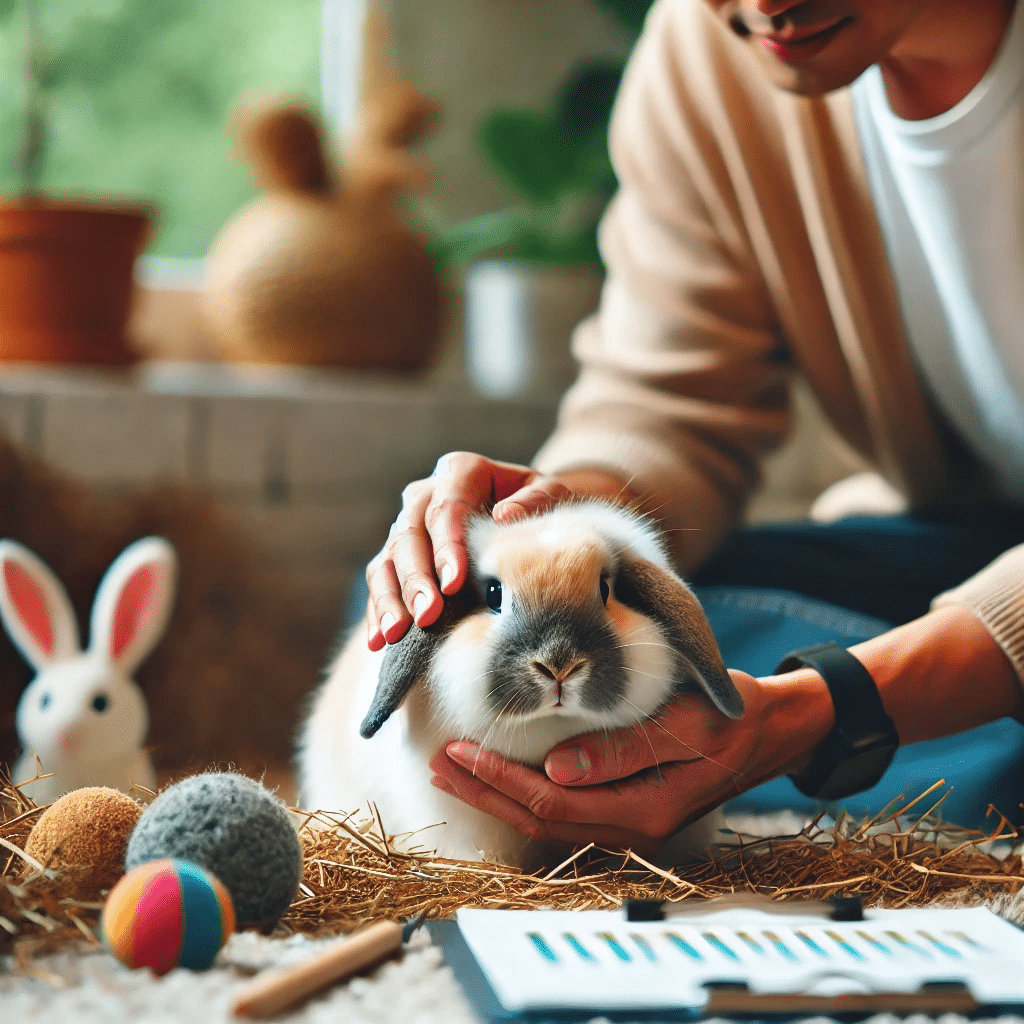
Ear position is useful only in context because normal ear carriage varies by breed and situation. Likewise, a single photograph cannot confirm whether a rabbit is comfortable or in pain.
Why Might a Rabbit Sit Hunched?
A tense hunch can occur when a rabbit is painful, unwell, frightened, or uncomfortable. Possible medical causes include digestive problems, dental disease, urinary discomfort, arthritis, sore feet, injury, or other illness. These conditions can share similar outward signs, so posture should guide you to assess the whole rabbit—not to choose a diagnosis at home.
Appetite and Droppings Matter
Check whether your rabbit is eating its usual hay and food and whether droppings are normal in size, number, and appearance. A rabbit that stops eating, produces markedly fewer or no droppings, or appears bloated needs immediate veterinary assessment. Digestive slowdown can worsen quickly, and the underlying reason may be pain or illness elsewhere in the body.
Movement and Behavior Matter
Notice whether the rabbit can move normally, changes position, interacts with a bonded companion, and responds to familiar sounds. Limping, difficulty standing, loss of balance, severe weakness, or remaining immobile are reasons to contact a veterinarian promptly.
Tooth Grinding Needs Context
Very soft tooth purring can occur when a relaxed rabbit is being gently stroked. Louder or persistent grinding together with a tense posture, reduced appetite, hiding, or reluctance to move is more concerning and should not be dismissed.
What to Do if Your Rabbit Is Hunched
1. Check for Urgent Warning Signs
- Reduced or absent appetite
- Fewer, smaller, or absent droppings
- A swollen or unusually firm-looking abdomen
- Marked lethargy, weakness, collapse, or inability to move normally
- Labored, rapid, or open-mouth breathing
- Loud tooth grinding, obvious injury, or signs of severe pain
If any of these signs are present, contact a rabbit-savvy veterinarian or emergency veterinary service now. Do not wait for the posture to resolve on its own.
2. Keep the Rabbit Safe While You Arrange Advice
Keep the rabbit in a quiet, familiar area with normal hay and fresh water available. Leave a bonded companion nearby if they are calm and safe together. Minimize unnecessary handling, especially if injury is possible, and use a secure carrier for transport.
Do not give human pain medication, force exercise, massage a swollen abdomen, or rely on treats, toys, or unprescribed home remedies to determine whether the rabbit is well. A rabbit accepting one favorite food does not rule out illness.

Reducing Health Risks
You cannot prevent every reason a rabbit might sit hunched, but daily observation helps you recognize change early. Provide an appropriate hay-based diet, constant access to fresh water, safe flooring and housing, regular exercise, and routine care from a rabbit-savvy veterinarian. Check appetite, droppings, movement, and behavior every day rather than waiting for an obvious crisis.
Frequently Asked Questions
Is a rabbit loaf position always a sign of pain?
No. Many comfortable rabbits rest with their feet tucked underneath. Concern increases when the body is tense and the posture appears with appetite, droppings, movement, breathing, or behavior changes.
Can GI stasis make a rabbit sit hunched?
Digestive pain and gastrointestinal stasis can be associated with a tense posture, but a hunch does not prove that diagnosis. Other painful or medical problems can look similar, and a veterinarian must identify the cause.
Should I wait to see whether my rabbit eats later?
Do not delay if your rabbit is eating less than normal, refusing food, producing fewer or no droppings, or acting markedly unwell. Rabbits can deteriorate quickly, so contact a rabbit-savvy veterinarian for guidance.
What if my rabbit hunches only when I approach?
Fear or uncertainty may contribute, but first consider whether the behavior is new and whether appetite, droppings, movement, and general activity are normal. Approach at floor level, move slowly, and allow the rabbit to choose contact. Seek veterinary advice for any unexplained or persistent change.
Sources reviewed
- PDSA: Rabbit body language — relaxed posture, stress signs, and veterinary assessment for unexplained behavior changes.
- PDSA: Limping in rabbits — pain, movement changes, reduced appetite, and when to contact a vet.
- VCA Animal Hospitals: Gastrointestinal stasis in rabbits — appetite, droppings, causes, diagnosis, and urgency.