Quick overview of hares
Hares are fast-running mammals belonging to the genus Lepus within the family Leporidae. These swift animals share the same family as rabbits but differ in significant ways—from their above-ground lifestyle to their precocial young born fully prepared for the world.
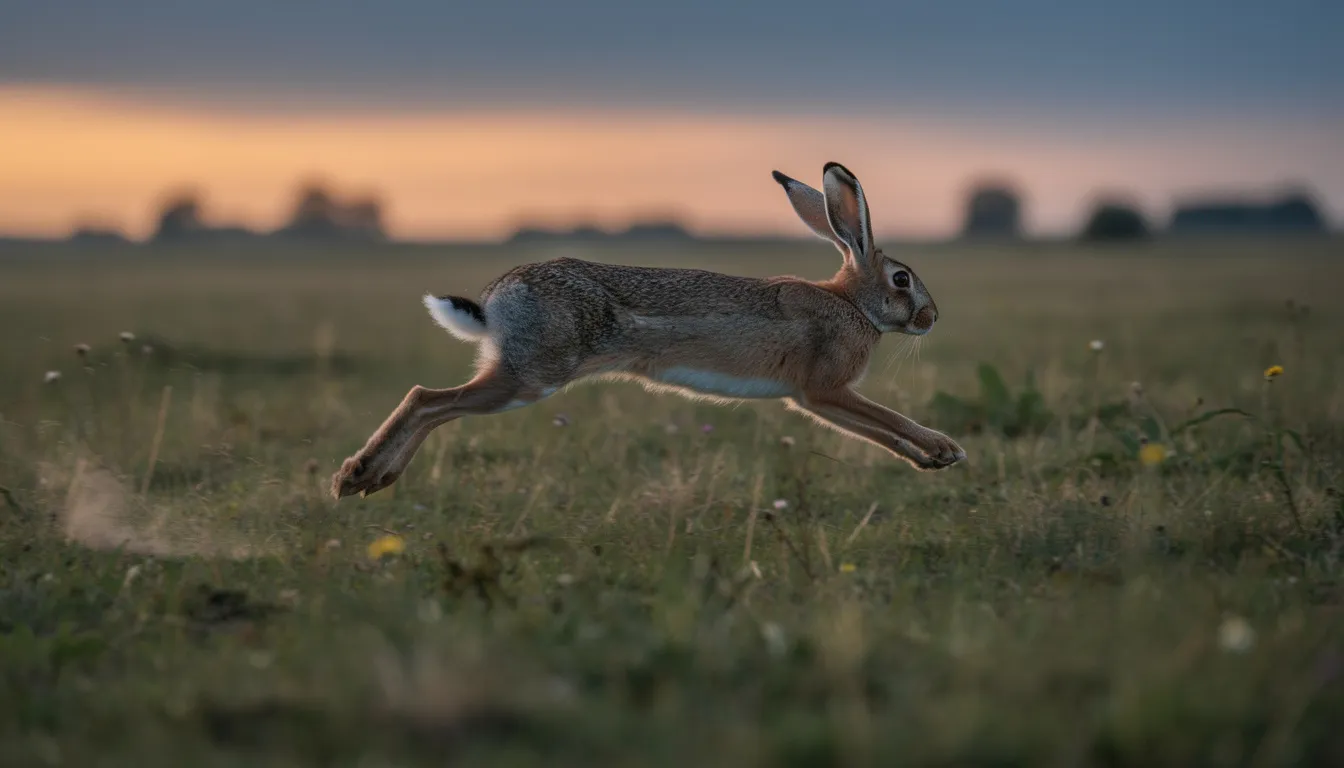
What makes hares instantly recognizable? They have very long, black-tipped ears, powerful hind legs built for explosive speed, and large eyes positioned high on the head for maximum visibility. The European hare, known scientifically as Lepus europaeus, can reach speeds of approximately 55–70 km/h (up to about 45 mph), making it one of the fastest land mammals in Europe.
Key facts at a glance:
-
Hares live above ground in shallow depressions called “forms,” while most rabbits dig burrows
-
Young hares (called leverets) are born fully furred with eyes open
-
Found across Europe, Asia, Africa, and North America
-
Primarily nocturnal and crepuscular feeders
-
Serve as important prey for predators including foxes and lynx
Taxonomy and classification
Understanding where hares fit in the animal kingdom helps clarify what separates them from their close relatives. Hares belong to the order Lagomorpha, which they share with rabbits and pikas. Within this order, hares are classified under the family Leporidae and specifically the genus Lepus, which contains around 30+ recognized species distributed worldwide.
Hares and rabbits are often considered the two species most commonly compared within the family Leporidae. While they share many similarities as members of the same family, hares and rabbits differ in habitat preferences, behavior, and certain ecological roles.
Here’s where it gets interesting: not every animal called a “hare” actually belongs to Lepus. The hispid hare (Caprolagus hispidus), for instance, sits in its own separate genus despite bearing the “hare” name. Meanwhile, animals called “jackrabbits” in North America are actually true hares—the white tailed jackrabbit and Lepus californicus (the black-tailed jackrabbit) are both members of genus Lepus.
Taxonomic summary:
-
Order: Lagomorpha (shared with rabbits and pikas)
-
Family: Leporidae
-
Genus: Lepus (true hares, including jackrabbits)
-
Species count: Approximately 30+ species worldwide
-
Chromosome count: Typically 48 chromosomes (compared to 44 in European rabbits)
-
Related but separate: Hispid hare in genus Caprolagus, not Lepus
The Lepus species have diversified across multiple continents, adapting to habitats ranging from Arctic tundra to scorching deserts. This adaptability explains why you’ll find the snowshoe hare (Lepus americanus) thriving in North American boreal forests while the varying hare navigates similar cold environments.
Physical characteristics
Hares display remarkable variation in size across species, though they’re generally larger than most rabbits. The European hare (also called the brown hare) measures approximately 50–70 cm in body length and weighs between 3–5 kg, with females typically larger than males. By comparison, the mountain hare (Lepus timidus) tends to be somewhat smaller, usually weighing around 2–3 kg.
The most striking physical features of hares include their longer ears—often measuring 9–11 cm and frequently tipped with dark brown or black markings—and their exceptionally large ears that serve multiple functions. These large hind legs aren’t just for show; they’re adapted for rapid acceleration and sustained high-speed running across open ground. The hind legs of a hare can propel the animal in explosive bursts and maintain zig-zag patterns that confuse predators.
Seasonal coat changes
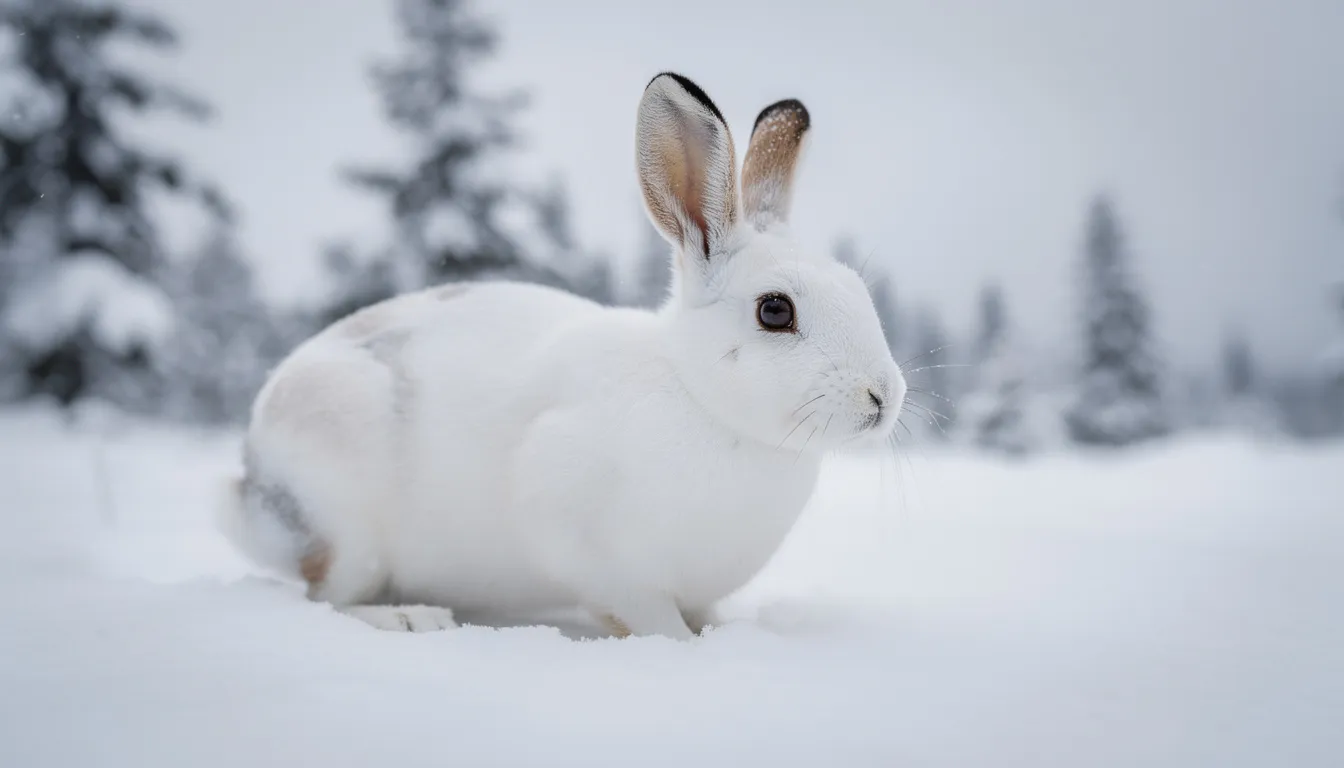
Several Lepus species undergo dramatic seasonal transformations. The snowshoe hare and mountain hare both transition from brown or grey summer coats to pure white winter pelage. This adaptation provides crucial camouflage against snow in their northern habitats. The change is triggered by photoperiod (day length) rather than temperature, which can occasionally leave these animals conspicuously mismatched when snow arrives late or melts early.
Adaptations for snow travel
Species living in snowy environments have developed specialized feet for navigating deep snow. The snowshoe hare’s name comes from its remarkably broad, fur-covered feet that distribute weight across snow surfaces—functioning much like natural snowshoes. This adaptation allows them to travel efficiently across powder that would bog down other animals.
Hares also possess a unique skeletal feature: jointed or fenestrated skull bones. These openings in the skull support strong chewing muscles while simultaneously lightening the overall skull weight—an elegant engineering solution for animals that need both powerful jaws and lightweight frames for speed.
Hares vs. rabbits
Despite their superficial similarities, hares and rabbits are distinct types of lagomorphs with fundamentally different life histories. Understanding these differences helps clarify why these animals, while related, occupy different ecological niches.
Size and appearance: Hares are generally larger than rabbits, with longer legs, longer ears, and often distinctive black ear or tail markings. Rabbits tend toward rounder, more compact bodies with shorter ears. The cottontail rabbits common in North America, for example, appear noticeably smaller and more compact than jackrabbits sharing their range.
Birth and development: This represents perhaps the most significant biological difference between these two groups. Hares give birth above ground in shallow depressions called “forms” to leverets that are born fully furred with open eyes, able to move around shortly after birth. Rabbits, by contrast, give birth underground to blind, hairless kits (altricial young) that require extensive maternal care before they can survive on their own. Most young rabbits are weaned in about a month, highlighting their rapid growth and reproductive efficiency.
Habitat and behavior: Hares live largely solitary lives above ground, using their speed and camouflage for protection. Rabbits live in more social arrangements, often constructing or occupying complex burrow systems called warrens. While hares rely on their powerful hind legs to outrun danger, many rabbit species retreat to the safety of their burrows.
Social structure: Hares typically do not live in groups, whereas rabbits form large groups called warrens.
Digestive similarities: Both hares and rabbits practice cecotrophy—re-ingesting soft fecal pellets called cecotropes to extract maximum nutrients from their high-fiber plant diet. This unusual digestive strategy allows these herbivores to efficiently process food that would otherwise yield insufficient nutrition.
|
Feature |
Hares |
Rabbits |
|---|---|---|
|
Body size |
Larger, longer limbs |
Smaller, more compact |
|
Birth location |
Above ground in “forms” |
Underground in burrows |
|
Young at birth |
Fully furred, eyes open |
Blind, hairless |
|
Social structure |
Mostly solitary |
Often social, live in groups |
|
Domestication |
Not domesticated |
Many breeds selectively bred |
Unlike rabbits, which have been selectively bred into numerous domesticated varieties for meat, fur, and companionship, hares have never been successfully domesticated.
Habitat and distribution
Hares occupy an impressively wide range across the globe, having adapted to diverse environments from frozen tundra to sun-baked deserts.
Global distribution: The genus Lepus spans much of Europe, Asia, Africa, and North America, with some species introduced to South America, Australia, and New Zealand. This widespread distribution reflects hares’ remarkable adaptability to different climatic conditions and habitat types.
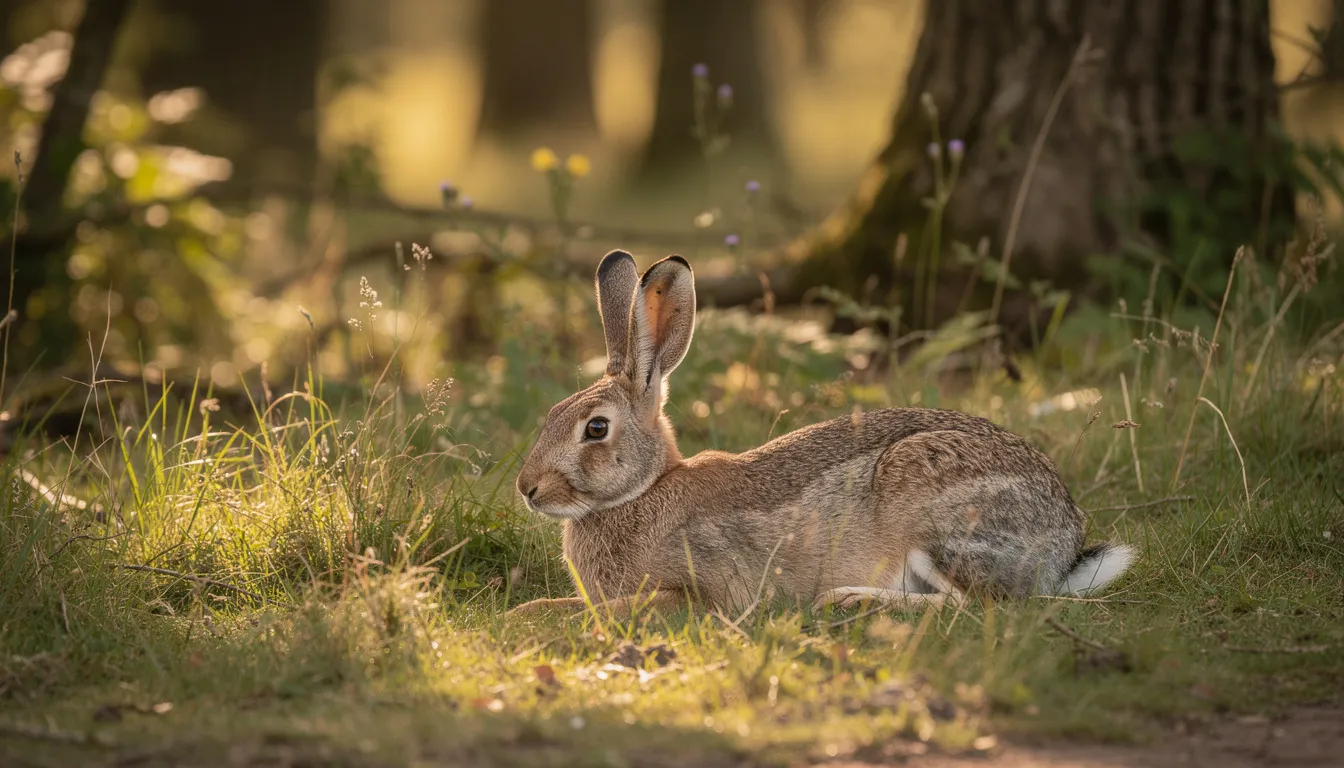
Habitat preferences by region:
-
European farmland and grasslands: The brown hare thrives in open agricultural landscapes, favoring a mosaic of crop fields, pastures, and woodland edges
-
North American boreal forests: The snowshoe hare occupies dense coniferous and mixed forests across Canada and the northern United States
-
North American deserts and scrublands: Jackrabbits (including Lepus californicus) inhabit arid sagebrush steppe, grasslands, and desert regions
-
Arctic and alpine tundra: The mountain hare (Lepus timidus) ranges across Scandinavia, Scotland, and alpine regions
-
African savannas and scrublands: Several Lepus species occupy grassland and shrubland habitats across the continent
Hares generally avoid dense forests and urban areas, preferring open habitats where their speed advantage can be fully utilized. They’re most commonly found along woodland edges, in agricultural landscapes, and across open steppe or tundra.
Introductions and invasiveness: Humans have introduced the European hare to parts of Australia, New Zealand, and South America, where it sometimes causes significant crop damage and competes with native species. These introduced populations demonstrate hares’ adaptability but also highlight the ecological disruption that can occur when species are moved outside their native range.
Diet and feeding behaviour
Hares are strict herbivores whose diet shifts considerably with the seasons. During warmer months, they feed primarily on grasses, herbs, leaves, and fresh shoots. As winter arrives and green vegetation becomes scarce, their diet transitions to woody browse—twigs, bark, and buds from bushes and young trees.
Specific dietary examples illustrate this flexibility:
-
Brown hares in Europe consume cereal crops, clover, dandelions, and young agricultural shoots during spring and summer
-
Snowshoe hares in North America browse extensively on willow, alder, and birch twigs, plus conifer needles, during winter months when deep snow covers ground vegetation
-
Jackrabbits in arid regions eat a variety of desert shrubs, grasses, and cacti, obtaining much of their water from food
The cecotrophy advantage
Like all lagomorphs, hares employ a specialized digestive strategy called cecotrophy. Their cecum (a pouch in the digestive tract) contains beneficial microbes that break down cellulose and produce nutrient-rich material. Hares expel this material as soft, green cecotropes and immediately re-ingest them—a process that allows extraction of vitamins, proteins, and other nutrients that would otherwise be lost.
This might sound unusual, but it’s remarkably efficient. The cecum can be up to ten times longer than the stomach, hosting a diverse microbial community essential for processing the high-fiber, relatively low-protein plant material that makes up the hare’s diet.
Key feeding traits:
-
Primarily crepuscular and nocturnal, feeding at dusk, throughout the night, and at dawn
-
Spend daylight hours resting in forms to avoid predators
-
Continuously growing teeth adapted for gnawing on tough plant material
-
Do not store food for winter (unlike pikas, which cache dried vegetation)
Reproduction and life cycle
The breeding season for hares varies by species and geography, but the European brown hare provides a well-documented example. These animals breed from approximately February through September, with peak activity occurring in early spring.
The gestation period for hares averages about 42 days, though it can range from 38 to 46 days depending on species and conditions. Litter sizes typically contain 1–4 leverets, with females capable of producing multiple litters per year—sometimes as many as four or more under favorable conditions.
Born ready for the world
Unlike rabbit kits, leverets enter the world fully prepared:
-
Born fully furred with eyes open
-
Weighing approximately 80–180 grams
-
Measuring 13–17 cm in length
-
Able to hop and move about within minutes of birth
-
Dispersed by the mother to separate locations to reduce predation risk
This precocial development makes sense given that hares nest in exposed forms rather than protected burrows. Leverets must be ready to flee danger from their first moments of life.
The boxing hares phenomenon
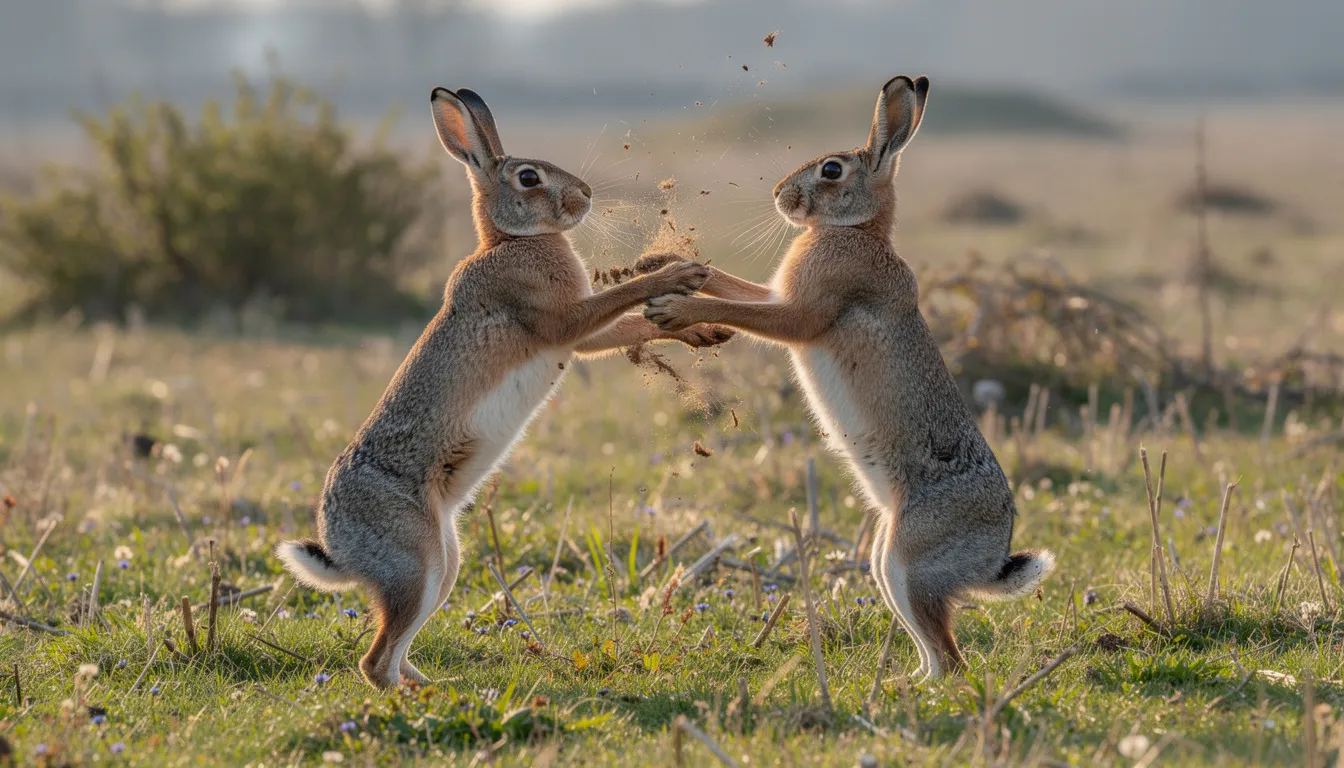
Spring in European fields often treats observers to the spectacle of “boxing hares”—animals standing on their hind legs and striking at each other with their front paws. Contrary to popular belief, this behavior typically involves females striking persistent males to test their determination or reject unwanted advances, rather than males fighting each other for dominance. These boxing interactions often occur as part of competition or mating rituals with other hares.
Reproduction summary:
-
Breeding season: February–September (European hare); mid-March–August (snowshoe hare)
-
Gestation: Approximately 42 days (range: 38–46 days)
-
Litter size: Typically 2–4 leverets
-
Litters per year: Up to 4 or more under good conditions
-
Sexual maturity: Around 8 months of age
-
Wild lifespan: Typically 3–4 years (up to 12 years possible)
A remarkable reproductive phenomenon called superfetation occurs in European hares, where a late-pregnancy female can mate, ovulate, and conceive again while still pregnant—resulting in two litters of different developmental stages in her uterus simultaneously.
Behaviour and adaptations
Hares have evolved an impressive arsenal of anti-predator strategies that compensate for their exposed lifestyle. Their primary defense combines stillness and explosive speed: a hare may remain motionless in its form, relying on camouflage, until a predator approaches too closely—then burst into a sprint reaching speeds that few predators can match.
When running from threats like foxes, coyotes, or hunting raptors, hares employ zig-zag running patterns that make them extraordinarily difficult to catch. Their powerful hind legs allow for sudden directional changes at full speed, a capability that has made them successful prey animals for millions of years.
Key behavioral adaptations:
-
Form usage: Resting in shallow depressions that provide concealment while allowing rapid escape in any direction
-
Solitary lifestyle: Living alone or in loose spatial arrangements rather than social groups, reducing competition and conspicuousness
-
Crepuscular/nocturnal activity: Feeding primarily during low-light periods when visual predators are less effective
-
Freezing behavior: Remaining completely still when detecting distant threats, relying on cryptic coloration
-
Explosive acceleration: Launching from rest to full speed almost instantaneously when danger approaches
Sensory adaptations
The large ears of hares serve dual purposes. Their exceptional hearing detects approaching predators from considerable distances, providing early warning. In warmer-climate species like jackrabbits, the extensive blood vessel network in the ears also functions as a radiator, dissipating body heat in hot environments.
Eye placement high on the sides of the head provides hares with an almost 360-degree field of view, allowing them to spot threats from virtually any direction while foraging. Their night vision is well-developed, supporting their nocturnal activity patterns.
Cultural significance: mythology and folklore
Few animals have captured human imagination quite like the hare. Across cultures and centuries, these swift mammals have symbolized speed, fertility, trickery, and transformation.
The trickster tradition
In African and African-American folklore, the hare appears as a clever trickster figure who outsmarts larger, stronger animals through wit rather than force. These stories, recorded from at least the 19th century but undoubtedly far older, likely influenced the American “Br’er Rabbit” tales and demonstrate the hare’s universal association with cunning intelligence.
“Mad as a March hare”
English folklore gave us the saying “mad as a March hare,” describing erratic or seemingly crazy behavior. This proverb directly references the conspicuous mating behavior of European hares during early spring, when they can be seen chasing, boxing, and generally behaving in ways that seem utterly frantic compared to their usual secretive nature.
Divine associations
In classical antiquity, hares were associated with love and fertility. Ancient Greek and Roman art frequently depicted hares alongside Aphrodite and Eros, the deities of love. This association likely stemmed from observations of hares’ prolific breeding habits and their springtime visibility.
Witchcraft connections
European witchcraft beliefs frequently involved hares. Accused witches were sometimes thought to transform into hares to travel undetected or to use hares as familiars—supernatural animal companions. This association may reflect the hare’s mysterious, nocturnal habits and ability to seemingly vanish into the landscape.
Key cultural themes:
-
Fertility symbol: Associated with spring, reproduction, and renewal
-
Trickster figure: Clever underdog who outsmarts stronger opponents
-
Witchcraft familiar: Linked to magic and transformation in European folklore
-
Seasonal marker: Visible spring behavior marking the turn of seasons
Hares in literature and art
The hare has inspired artists and storytellers for millennia, appearing in works that range from ancient fables to Renaissance masterpieces.
Aesop’s enduring lesson
Perhaps the most famous hare in Western literature appears in Aesop’s fable “The Tortoise and the Hare,” dating to ancient Greece. In this morality tale, a swift but overconfident hare loses a race to a slow but persistent tortoise—establishing the hare as a symbol of speed undermined by arrogance. The fable’s message about steady perseverance versus unreliable talent continues to resonate today.
The “three hares” motif represents one of art history’s most intriguing mysteries. This design—depicting three running hares arranged in a circle, each sharing its ears with its neighbors—appears across an astonishing range of cultures and time periods. Found in Buddhist cave temples in China from around the 6th–7th century CE, the motif later appeared in medieval European churches, Islamic mosques, and Jewish synagogues. Its meaning remains debated, but its widespread distribution speaks to the hare’s universal symbolic power.
Dürer’s masterwork
German Renaissance artist Albrecht Dürer created “Young Hare” (German: “Feldhase”) in 1502—a watercolor so precise and lifelike that it remains one of the most celebrated natural history images ever produced. The painting captures every whisker and hair of its subject, demonstrating both Dürer’s technical mastery and the European hare’s status as a worthy artistic subject.
In modern literature, Lewis Carroll’s “Alice’s Adventures in Wonderland” (1865) features the March Hare as a tea-party companion whose bizarre behavior directly references the old English proverb. Carroll’s portrayal cemented the “mad March hare” image in popular culture, where it persists in various adaptations to this day.
Conservation status and threats
While some hare species remain abundant across their ranges, others face significant pressures from habitat change, hunting, and climate shifts.
The European brown hare experienced notable population declines across parts of western Europe during the late 20th century. Agricultural intensification—including the loss of field margins, increased pesticide use, and the shift from hay meadows to silage—has reduced both food availability and cover for leverets. Modern harvesting machinery can also destroy young hares hidden in crop fields before they can escape.
For snow-dependent species, climate change poses a particularly insidious threat. When snowfall arrives late or melts early, white-coated snowshoe hares and mountain hares become highly visible against brown landscapes—easy targets for predators. Research suggests this mismatch between coat color and snow cover may become increasingly problematic as winters shorten.
Species of conservation concern:
-
Hispid hare (Caprolagus hispidus): Listed as Endangered on the IUCN Red List, this smallest member of the hare family is restricted to tall grasslands in the southern Himalayan foothills
-
White-tailed jackrabbit: Declining in some U.S. states due to habitat conversion
-
Italian hare: Limited range and threatened by hybridization with introduced brown hares
-
Mountain hare: Declining in some areas due to habitat loss and climate change
Conservation approaches:
-
Agri-environment schemes encouraging wildlife-friendly farming practices
-
Habitat management maintaining mosaics of cover, grassland, and woodland edges
-
Hunting regulations and bag limits
-
Research into climate adaptation and population monitoring
Hares and humans today
In modern ecosystems, hares occupy a crucial position as both important herbivores and essential prey for numerous predators. Red foxes, coyotes, lynx, golden eagles, great horned owls, and various other predators depend on hare populations as a primary food source. In some ecosystems—particularly the boreal forests where snowshoe hares are abundant—hare population cycles drive corresponding cycles in predator populations, demonstrating their keystone importance.
This ecological role occasionally brings hares into conflict with human interests. When populations are high, hares can cause notable damage to agricultural crops, orchards, and young trees—particularly during winter when they gnaw bark from saplings and fruit trees. Farmers and foresters sometimes view hares as pests, though their overall impact remains far less significant than that of some rodent species.
Unlike rabbits, hares have never been successfully domesticated. While they may be hunted for meat or sport in many countries under regulated conditions, attempts to raise them in captivity have consistently failed due to their high-stress response to confinement.
Observing hares responsibly
For those interested in watching these remarkable mammals, patience and respect are essential:
-
Visit open fields, woodland edges, and agricultural margins at dawn or dusk
-
Use binoculars to observe from a distance
-
Avoid approaching forms where leverets may be hiding, particularly in spring
-
Keep dogs leashed in areas where hares are breeding
-
Report sightings to local wildlife recording schemes
Whether you spot a brown hare darting across European farmland, a snowshoe hare navigating North American forests, or a jackrabbit bounding across desert terrain, these encounters offer glimpses of animals perfectly adapted to life on the run. Their speed, their senses, their remarkable reproductive strategies—all reflect millions of years of evolution alongside the predators that pursue them.
Understanding and protecting hares means preserving not just individual species, but the complex ecological relationships that sustain entire ecosystems. From the lynx that depends on snowshoe hares to the farmland food webs that include brown hares, these swift mammals connect predator and prey, field and forest, human culture and wild nature.
The next time you’re out at dusk and catch movement in a field margin—that explosive burst of speed and those distinctive long ears—take a moment to appreciate one of nature’s most elegant survival stories, still unfolding across landscapes worldwide.