Male and female rabbits have different reproductive anatomy, but sex alone is a poor predictor of personality. A rabbit’s temperament is shaped more by the individual, age, health, past experience, socialization, and whether they have been neutered. If you are choosing a companion, focus on compatibility and responsible bonding—not stereotypes about bucks and does.
Male vs female rabbits at a glance
| Difference | Male rabbit (buck) | Female rabbit (doe) |
|---|---|---|
| Genital opening | Rounded opening; the penis protrudes with gentle pressure | Vertical slit; the vulva is usually more pointed |
| Testicles | May become visible from roughly 10–12 weeks, but can be retracted | None |
| Neutering procedure | Castration removes the testicles | Spaying removes the ovaries and usually the uterus |
| Hormone-related behaviour | Intact males may spray, mount, or act territorially | Intact females may become territorial or experience false pregnancies |
| Personality | Individual—sex does not reliably predict friendliness or confidence | Individual—sex does not reliably predict shyness or affection |
| Companionship | A neutered male and neutered female are often the easiest pairing to bond, but every match still needs a careful introduction | |
This comparison is useful for understanding anatomy, health care, and bonding. It should not be used to decide that one sex is automatically a “better” pet.
Are male or female rabbits friendlier?
There is no dependable rule that males are more outgoing or that females are more timid. Some bucks are relaxed and affectionate; others are cautious. The same is true of does. Hormones can affect behaviour in rabbits that have not been neutered, but hormone-related behaviour is not the same thing as a fixed personality.
When meeting a rabbit, pay attention to the individual in front of you. Ask the rescue or current caregiver how the rabbit responds to handling, unfamiliar people, other rabbits, changes in routine, and enrichment. A calm adult rabbit whose personality is already known may be a more predictable match than choosing a young rabbit based only on sex. Our rabbit body language guide can help you read common behavioural cues.

Physical differences you can actually use
The reliable way to distinguish a male from a female is to examine the genital area safely. Head shape, ear length, foot size, body size, digging, mounting, and spraying are not reliable ways to identify sex. Breed, age, body condition, and normal individual variation can all affect appearance and behaviour.
- Male: gentle pressure above the genital area reveals a protruding penis with a rounded opening. Young bucks may not have visible testicles, and adult bucks can retract them.
- Female: the vulva has a vertical slit and is generally closer to the anus.
Young rabbits are easy to misidentify. Do not place a rabbit flat on their back to check, and do not continue if they are struggling. Our step-by-step guide to sexing a rabbit explains the process in more detail. If there is any doubt, ask a rabbit-experienced veterinarian or veterinary nurse to confirm.
How hormones can affect behaviour
Rabbits of either sex can mount, mark territory, dig, or behave defensively. These behaviours do not prove that a rabbit is male or female. Mounting can continue after neutering because it can also occur during bonding or social negotiation.
Before neutering, hormones may make urine spraying, mounting, territorial behaviour, false pregnancy, or fighting more likely. Neutering often reduces hormone-driven behaviour and makes bonding and litter habits easier, but it is not an instant personality change or a substitute for an appropriate environment.
Health and neutering differences
Neutering prevents unwanted litters and supports safe companionship. The procedure is different for each sex, so timing and recovery also differ.
Male rabbits
- Castration is usually possible after the testicles descend, often around 10–12 weeks, although the appropriate time depends on the rabbit and the veterinarian.
- A male can remain fertile for up to six weeks after castration, so he must not have contact with an unspayed female during that period.
- Castration removes the risk of testicular cancer and often reduces spraying and other hormone-driven behaviour.
Female rabbits
- Spaying is abdominal surgery and is commonly discussed with a rabbit-experienced veterinarian from roughly four to six months of age.
- Unspayed females have a high risk of serious uterine disease, including uterine cancer and pyometra. Spaying removes these reproductive organs and prevents pregnancy.
- Spaying may reduce false pregnancies and hormone-related territorial behaviour.
Surgery always has risks, and rabbits need species-appropriate anaesthesia, pain relief, feeding support, and monitoring. Discuss the timing and individual risk with a veterinarian who regularly treats rabbits.
Which pairing usually works best?
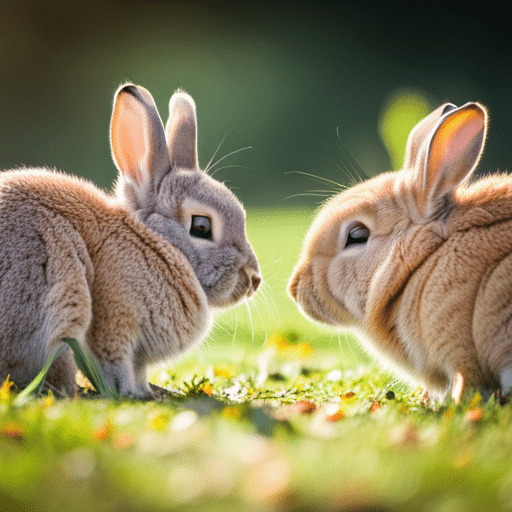
Rabbits are social animals and usually benefit from living with a compatible rabbit. Welfare organizations commonly recommend a neutered male with a neutered female as the pairing that is often easiest to bond. That does not guarantee compatibility, and same-sex pairs can also succeed when both rabbits are neutered and carefully matched.
Introductions should be gradual, supervised, and carried out in neutral space. Do not put unfamiliar rabbits together and assume that sex or neuter status will prevent fighting.
How to choose between a male and female rabbit
For most homes, sex should be a secondary consideration. A better checklist is:
- Choose for compatibility. If you already have a rabbit, let an experienced rescue help with supervised matching.
- Confirm sex and neuter status. Records can be wrong, especially for young rabbits.
- Consider the individual. Look at health, confidence, handling tolerance, activity level, and known history.
- Plan for veterinary care. Find a rabbit-experienced practice and budget for neutering, vaccination, and unexpected illness.
- Meet welfare needs. Space, hay, companionship, enrichment, and preventive care matter far more than whether the rabbit is male or female. Start with our rabbit care guide.
Common myths
“Male rabbits are always calmer.”
No. Sex does not guarantee temperament. Neutering, health, age, environment, and the rabbit’s individual history all matter.
“Female rabbits are always larger.”
No. Some breeds show sex-related size differences, but breed and individual variation are more useful than sex when estimating adult size.
“Only males spray or mount.”
No. Both sexes can spray, mount, and behave territorially. These behaviours cannot reliably identify a rabbit’s sex.
“Two rabbits from the same litter will always stay bonded.”
No. Siblings can begin fighting as they reach sexual maturity. Confirm their sexes early, prevent pregnancy, and discuss neutering with a rabbit-experienced veterinarian.
The bottom line
The meaningful differences between male and female rabbits relate mainly to reproductive anatomy, neutering, and some hormone-driven behaviour. Neither sex is automatically friendlier, easier, or better for a first-time owner. Choose the individual rabbit and the right companion match, then provide the care and veterinary support both sexes need.
Sources reviewed
Reviewed for source accuracy on 17 September 2026. This educational guide does not replace an examination or advice from a rabbit-experienced veterinarian.